Exploring the Burana Tower and Balasagun: A Journey Through Kyrgyz History
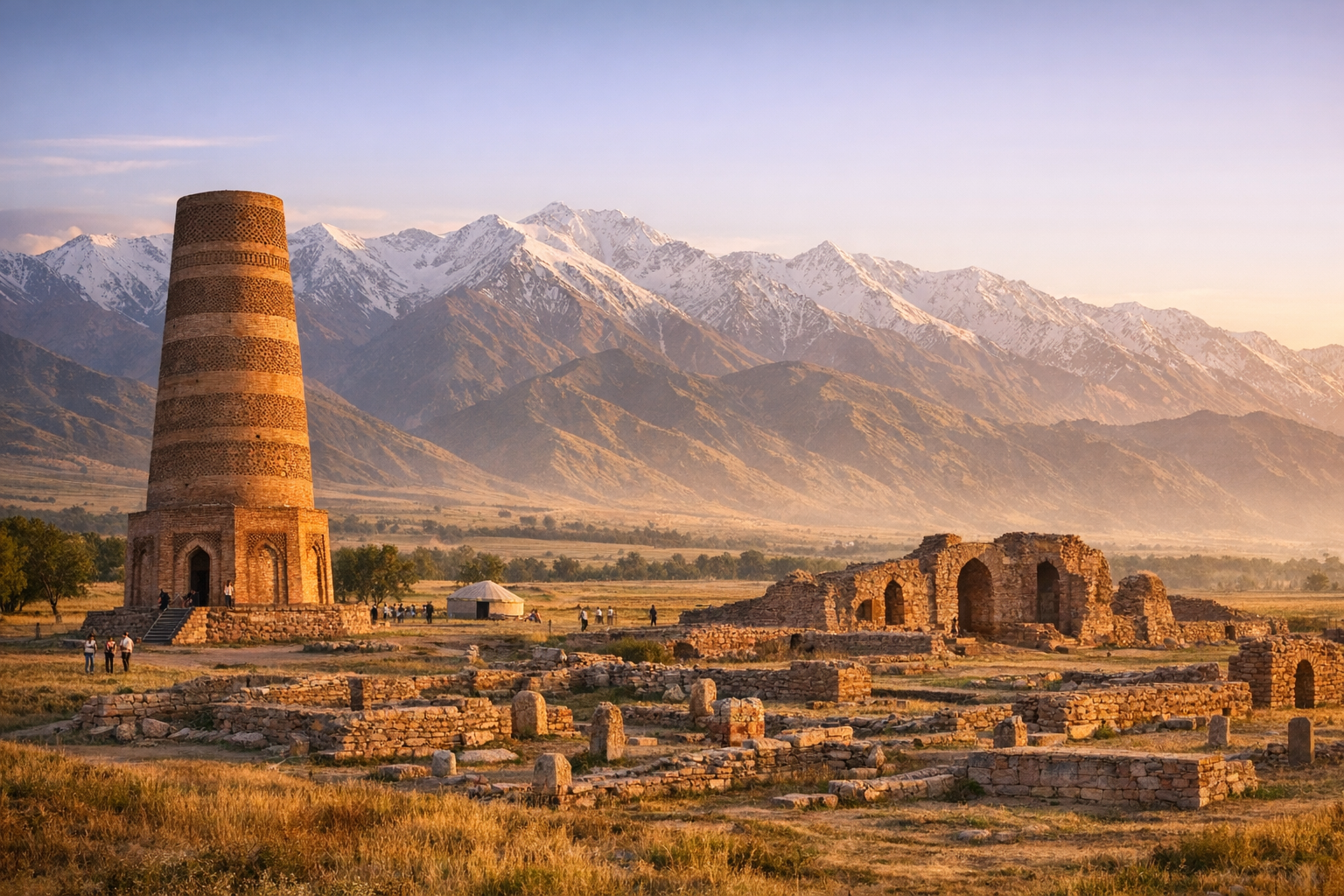
Journey into History: Burana Tower and Ancient Balasagun
Nestled in the Chuy Valley of northern Kyrgyzstan, the Burana Tower stands as a testament to the grandeur of the Karakhanid era, marking the ancient city of Balasagun. Dating back to the 11th century, this minaret reflects the region's Islamic influence and the architectural innovation of the time. Balasagun, once a flourishing metropolis on the famed Silk Road, was a cultural and economic hub connecting East and West. This city played a pivotal role in the development of Central Asian trade, culture, and religion, leaving behind remnants that evoke images of bustling bazaars and scholarly gatherings. The Burana Tower, originally believed to be part of a mosque complex, exemplifies the typical designs of Karakhanid architecture with its round, tapering structure crafted from mud brick and lined with decorative brickwork. Standing at an estimated original height of 45 meters, it now reaches about 25 meters, after surviving numerous earthquakes. Its design not only symbolized religious devotion but also served as a surveillance tower, watching over the vast steppes. Surrounded by mausoleums and an archaeological site brimming with artifacts, Burana offers insights into the life and times of the Karakhanid dynasty. Exploring Burana isn't just about witnessing an ancient relic; it's a dive into a narrative that intertwines nomadic traditions with the cosmopolitan flair of a Silk Road city. Present-day visitors will find themselves captivated not only by the tales these stones tell but by the sweeping landscapes of the Chuy Valley—where mountain ranges meet grassy plains and a tapestry of flowers bloom in the spring. Embracing these historical landmarks while engaging with the local culture offers an enriching perspective into the evolution of Kyrgyz identity and society.
Practical Logistics, Safety Protocols & Cultural Etiquette
Traveling to Burana Tower requires thoughtful preparation. The best time to visit is between May and October, avoiding the harsh winter months, particularly if you're unfamiliar with snow-bound travel. Ensure you have any necessary permits, although Burana does not require formal permissions, border zones further east might, especially if you plan on extending your exploration. Local marshrutkas, or minibus taxis, from Bishkek to Tokmok run regularly; expect to pay around 50 KGS Som for a one-way trip to reach Tokmok. From there, taxis to Burana are available. Mastering some Kyrgyz phrases can facilitate your interactions: greetings like 'Salamatsyzby' (hello) go a long way in showing respect. Additional cultural etiquette includes dressing modestly, especially around rural communities, to respect their customs. When engaging with locals, observe traditional practices such as removing shoes before entering a yurt. Water purification tablets or a reliable filtration system is advisable, as you may not always find bottled water at the site. Elevation concerns are minimal at Burana, but if venturing further into the mountains, acclimatization techniques become essential. These include gradual elevation gain and staying well-hydrated. Always inform local authorities or guesthouse staff of your trek plans for safety. Yurt stays in nearby villages offer immersive cultural experiences, where you can learn firsthand about kumis production—fermented mare’s milk. Participation demonstrates appreciation for their hospitality. Remember, transactions in small notes of KGS are preferred, and round up to leave a small tip, though not obligatory, is warmly received.
Before heading to Burana, consider visiting the bustling Osh Bazaar in Bishkek to gather supplies and taste traditional Kyrgyz snacks like samsas and lepyoshkas; it's an excellent introduction to local flavors before setting on your journey.
Engage with the past by organizing a guided tour with CBT (Community Based Tourism); guides often come from families linked to the region’s history, offering personal stories that bring an added layer of authenticity and depth to your exploration of Burana and Balasagun.
Take a moment to explore the balbals around Burana Tower. These ancient stone figures, often mistaken for grave markers, served as commemorations for fallen warriors, revealing aspects of the steppes' warrior culture intertwined with the city’s more urban history.
Frequently Asked Questions About Burana Tower History and Balasagun Karakhanid City
What is the historical significance of Burana Tower?
Burana Tower represents the rich Islamic influence from the Karakhanid era, serving as a minaret and cultural emblem of Balasagun. It highlights the significance of the Silk Road and the exchange of ideas and commerce between East and West, reflecting a pivotal period in Central Asian history.
How can I reach Burana Tower from Bishkek?
You can reach Burana Tower by taking a marshrutka from Bishkek to Tokmok, which costs around 50 KGS Som per person. From Tokmok, a taxi to Burana Tower is available. The trip offers scenic views of the Chuy Valley and traditional Kyrgyz landscapes.
What should I wear and pack when visiting Burana Tower?
Dress comfortably and modestly, respecting local customs. Wear sturdy walking shoes, and bring essentials like water, snacks, and a map for navigation. Summer visitors should pack sunscreen and hats for protection against the sun, while winter travelers should prepare for cold conditions.
Plan Your Kyrgyzstan Wilderness Expedition
Ready to explore the untamed Tian Shan mountains? Contact the Wild Kyrgyzstan team at wildinkyrgyzstan.com to book your custom guided trek or explore our self-guided expedition itineraries.