Unveiling Sulaiman Too: The Sacred Mountain of Osh
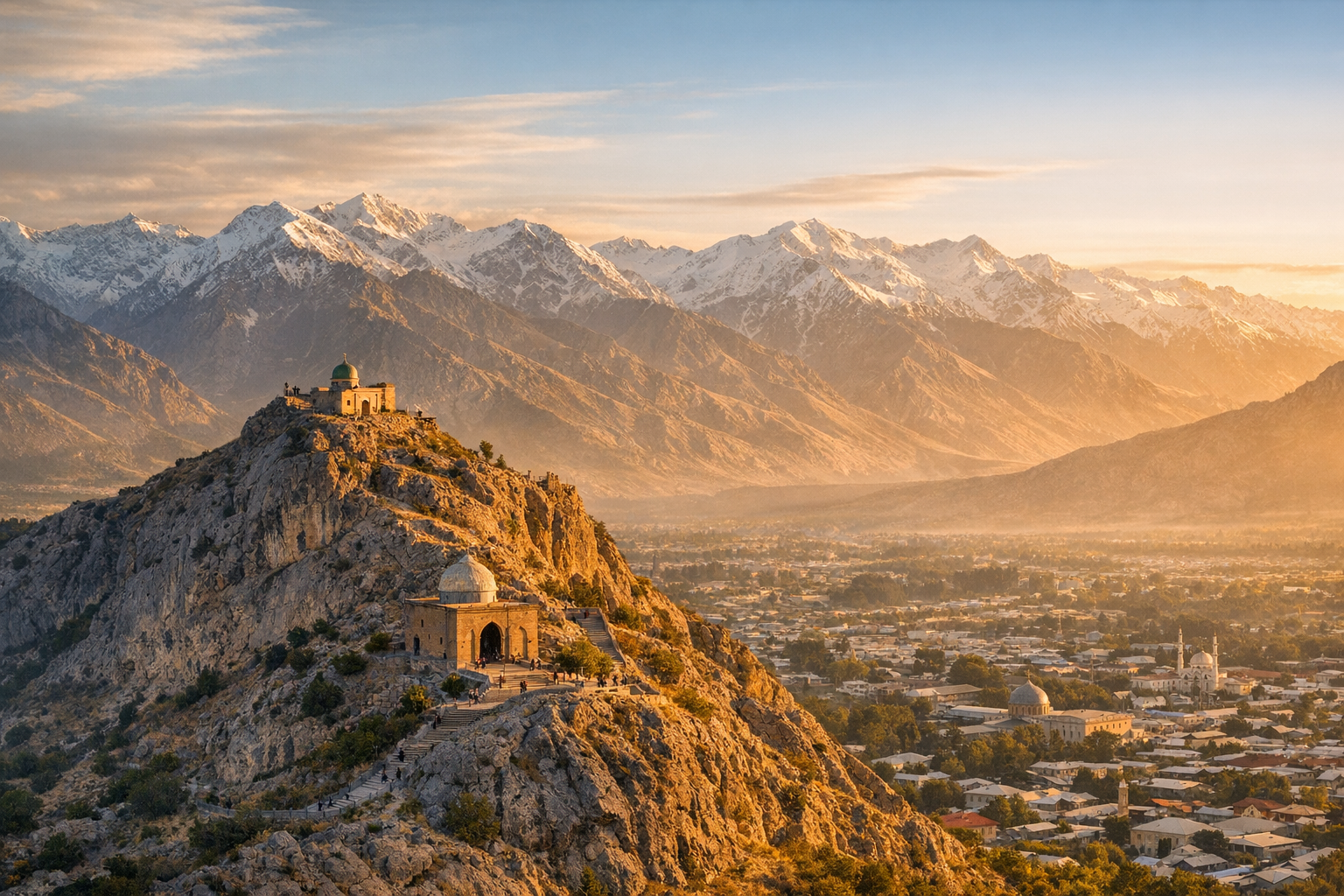
Exploring the Spiritual Heart of Kyrgyzstan: Sulaiman Too
Sulaiman Too, a UNESCO World Heritage Site, stands proudly in the city of Osh, Kyrgyzstan. Revered as a sacred mountain for centuries, it holds immense cultural and spiritual significance. The mountain's silhouette, resembling a lying figure, is an integral part of the local landscape, deeply intertwined with the region's history and spiritual practices. Sulaiman Too, also known locally as Sulaiman's Throne, serves as a pilgrimage site for Muslims, echoing tales of Prophet Solomon's visit. Pilgrims and travelers alike are drawn to this enigmatic site that spans five summits and offers panoramic vistas of Osh city. Throughout history, Sulaiman Too has been a beacon of human spirituality, symbolizing a fusion of natural grandeur and human belief across various eras. Located in the Fergana Valley, this mountain has remarkably retained its place as a sacred space, even as empires rose and fell around it. Its cultural and religious allure has not only withstood the test of time but has woven an intricate tapestry of legends and historical events that underpin Kyrgyz cultural identity. Sulaiman Too's significance is exemplified by its native terminology, where 'Too' translates to 'mountain' in Kyrgyz. Geographically, it is positioned in the heart of Osh, one of the oldest cities in Central Asia. The city's historical roots trace back to the Silk Road, and Sulaiman Too has often been an integral part of that narrative, offering both shelter and spiritual solace to traders and travelers. As a modern traveler exploring this revered site, Sulaiman Too provides a unique opportunity to delve deep into the religious fabric and historical nuances of Kyrgyz culture, allowing for a truly immersive experience. Whether you're drawn by its spiritual resonance, historical context, or breathtaking views, this sacred mountain retains its charm and allure as a timeless monument among the natural wonders of Kyrgyzstan.
Practical Logistics, Safety Protocols & Cultural Etiquette
Planning a visit to Sulaiman Too requires attention to logistics and an understanding of local customs to ensure a respectful and insightful experience. The best time to explore is during the spring and early autumn when temperatures are mild and conducive for hiking. While there's no need for special permits to visit Sulaiman Too itself, travelers should respect religious protocols at sacred sites. Communicating with locals can be enhanced by learning a few basic Kyrgyz phrases, like 'Salamatsyzby' (Hello) and 'Rakhmat' (Thank you), fostering goodwill and mutual respect. When visiting religious sites on Sulaiman Too, modest clothing is advised. Women are encouraged to cover their heads, and men should refrain from wearing shorts. It's courteous to remove shoes before entering enclosed sacred areas. The spiritual significance of these sites to the local populace adds an additional layer of meaning to the journey, reinforcing the importance of cultural sensitivity. Travelers are advised to carry KGS Som for small purchases such as entrance fees and local souvenirs. Transport to and from Osh can be arranged through reliable marshrutkas, the shared minibuses that connect various parts of Kyrgyzstan. Costs are economical, usually less than 100 KGS Som. Water purification tablets or filters can be practical for those planning longer hikes off the main trails or venturing beyond the city. Such precautions, alongside altitude acclimatization strategies — though Sulaiman Too's altitude is not extreme — contribute to a safe and enjoyable trek. Yurt stays offer a cultural highlight, enabling visitors to experience nomadic hospitality firsthand. Guests should observe etiquette by removing shoes at the yurt's entrance and being mindful of customary practices, such as seating arrangements and communal meal settings. A customary offering of kumis, a traditional fermented mare’s milk, is a gesture of hospitality that reflects the depth of Kyrgyz hospitality.
Embark on an early morning hike to catch the sunrise over Sulaiman Too's peaks. The soft light illuminating the ancient petroglyphs adds an ethereal quality to this sacred landscape, a sight that resonates deeply with its spiritual heritage.
Engage with local guides available through CBT (Community Based Tourism) for an enriched understanding. These guides often share personal stories and historical narratives, offering a deeper connection to the mountain's living history.
Optimize your visit by attending local mosque prayers. This immersive experience highlights the spiritual importance of Sulaiman Too, providing an opportunity to observe religious practices and interactions that shape the community's rhythm.
Frequently Asked Questions About Sulaiman Too
What is the best time of year to visit Sulaiman Too?
The best time to visit Sulaiman Too is during the spring (April to June) and autumn (September to October) when the weather is mild, and the conditions are perfect for hiking. Summer can be hot but manageable with proper sun protection.
How much does it cost to visit Sulaiman Too?
Entrance fees to Sulaiman Too sites are relatively modest, often less than 50 KGS Som. Additional costs include transportation and local guide services, which typically range from 500 to 1000 KGS Som, ensuring a fulfilling discovery of the area's history.
Are any special permits needed for visiting the mountain?
No special permits are required for visiting Sulaiman Too, as it is accessible to the public. However, adherence to cultural etiquette and respectful behavior at religious sites are strongly advised to honor local customs.
Plan Your Kyrgyzstan Wilderness Expedition
Ready to explore the untamed Tian Shan mountains? Contact the Wild Kyrgyzstan team at wildinkyrgyzstan.com to book your custom guided trek or explore our self-guided expedition itineraries.