Unearthing the Legacy of Tash Rabat: The Silk Road Caravanserai
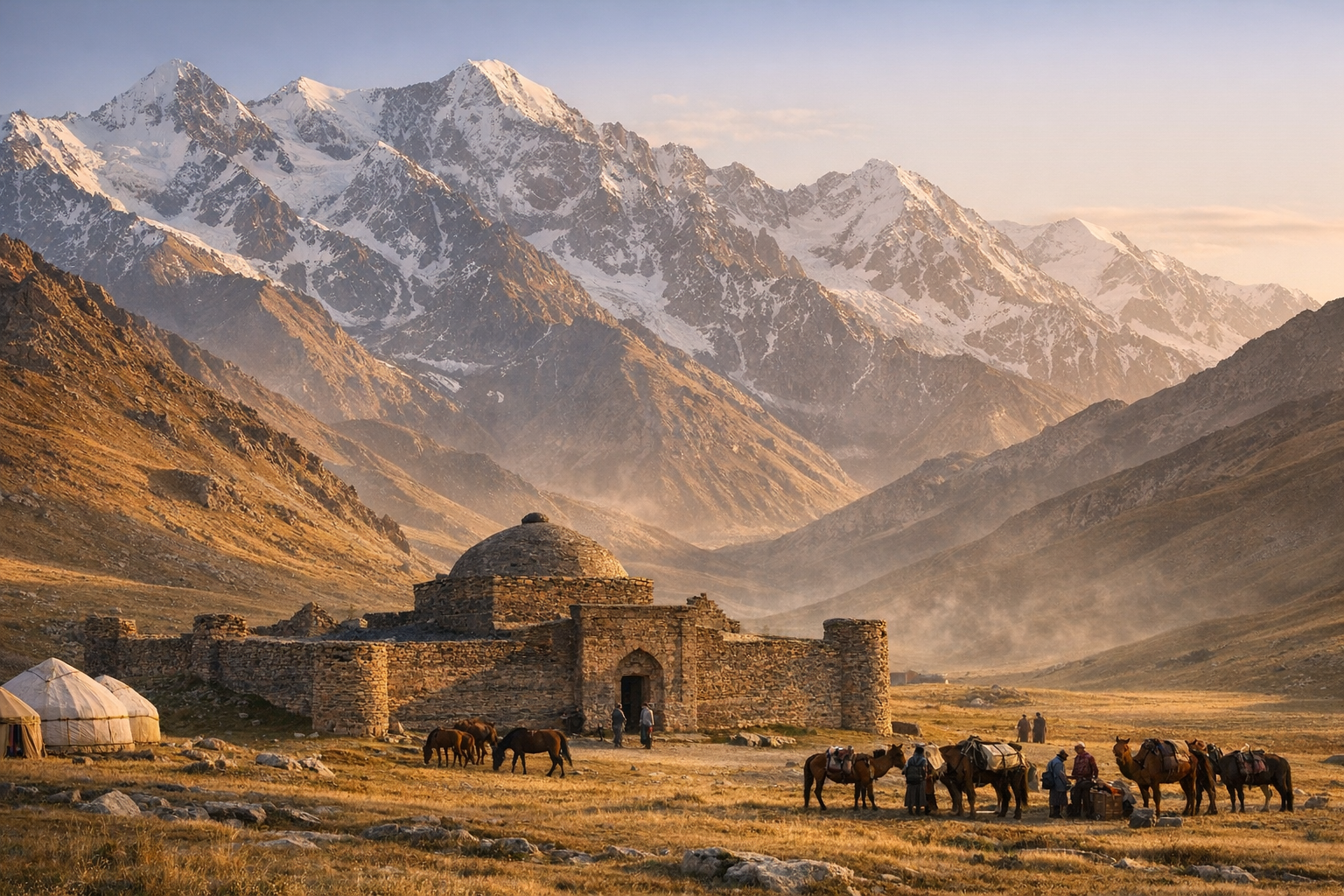
Tracing the Footsteps of Ancient Traders: Introduction to Tash Rabat
In the remote and beautiful heights of Kyrgyzstan lies Tash Rabat, an ancient stone caravanserai steeped in history. This historical monument, nestled in the At-Bashy Range of the Tian Shan mountains, served as a crucial rest stop along the Silk Road, offering shelter and security to traders and travelers. The significance of Tash Rabat is intricately linked to the broader tapestry of Silk Road lore, where caravans carried silks, spices, and precious goods between East and West. Constructed in the 15th century, some believe it could have origins going back earlier as a Nestorian monastery or a fortified rest house used by merchants. Its robust stone structure, featuring 31 rooms around a central hall, offers a historical window into medieval trade networks and nomadic lifeways.
The geographical setting of Tash Rabat is captivating. Positioned at an altitude of 3,500 meters, it is surrounded by expansive jailoos—summer pastures that local herders use for grazing. The region exudes a sense of rugged beauty and isolation, a landscape framed by mountains and vast skies. This setting isn't just a picturesque backdrop but a vital element in understanding the caravanserai's history. The Tian Shan, often called the 'Mountains of Heaven,' have long served as both barriers and conduits, sculpting the flows of trade, culture, and conquest.
Intertwined with Kyrgyz history, Tash Rabat provides insight into the nomadic cultures that have roamed these lands for centuries. Unlike much of the world’s architecture, defined by sedentary urban societies, this site speaks to the itinerant way of life of the Kyrgyz people, whose yurts and traditions remain vibrant today. The caravanserai stands as a testament to their adaptation and resilience in utilizing and preserving their environment over generations.
Exploring Tash Rabat is more than a journey through time; it is an immersive walk into a narrative where ancient pathways, economic ambitions, and social bonds intertwined. Aspiring travelers need not just come as outsiders but can engage with local guides, often CBT certified (Community-Based Tourism), who enrich the journey with their depth of knowledge and personal anecdotes. Such excursions are valuable not just for their historical import but also as immersive encounters with contemporary Kyrgyz nomadic culture.
Practical Logistics, Safety Protocols & Cultural Etiquette
When planning an expedition to Tash Rabat, timing is crucial due to Kyrgyzstan’s extreme weather variations. The site is best visited from late spring to early fall—advice reinforced by practical considerations. The roads, usually impassable in winter, clear of snow, and herders unfold migratory routes for their animals as pastures thrive, adding vitality to the landscapes.
A fundamental requirement is registering your presence at the Naryn Border Guard office due to Tash Rabat’s proximity to the Chinese border. This ensures safety and confirms permission to explore border proximity areas. Entry fees vary but are modest, generally under a thousand KGS Som, promoting accessibility while supporting local infrastructure.
Altitude poses a unique challenge. At over 3,500 meters, it's necessary to acclimatize properly. Travelers should spend a few days in higher-elevation areas like Song-Kul to reduce risks of altitude sickness. Hydration is critical, and many experienced hikers prefer to carry water purification tablets to ensure a steady supply of safe drinking water while on remote trails.
Cultural etiquette enhances any visit. When invited into a yurt, gestures like a slight bow when entering and removing shoes demonstrate respect. Kyrgyz people value hospitality, and reciprocating with small gifts like tea or fruit can make interactions warmer. While exploring, polite Kyrgyz phrases can ease communication, such as 'Salamatsyzby?' (Hello) and 'Rakhmat' (Thank you). Taking part in local customs or games such as kok-boru, akin to polo, is an enriching experience, balancing action and tradition.
Respect the fragile mountain environment by sticking to established trails and taking all trash back with you to avoid disruptions to local ecosystems.
Engage with Community-Based Tourism (CBT) initiatives to support local economies and get authentic insights into the region’s history and culture.
Be prepared for sudden weather changes; pack layers, a rain jacket, and sun protection to stay comfortable across varied mountain conditions.
Frequently Asked Questions About Tash Rabat Silk Road Caravanserai History
What is the significance of Tash Rabat in Silk Road history?
Tash Rabat was a pivotal caravanserai on the Silk Road, offering rest and protection to traders journeying between China and Europe. Its strategic location in the Tian Shan mountains provided essential respite and was part of a network facilitating trade, cultural exchange, and geopolitical interactions. Historical structures like Tash Rabat embody the flow of commerce and ideas that shaped Eurasian civilizations.
How much does it cost to visit Tash Rabat?
Visiting Tash Rabat is relatively affordable. Entry fees may be around 500–1000 KGS Som, supporting local maintenance. Additional costs include transportation from Naryn and possibly hiring a guide, varying based on preferences and travel arrangements. Budgeting for meals and yak-drawn tours or yurt stays can enhance the experience. Coordination through CBT can streamline costs and logistics, offering packaged deals.
What should I pack for a trip to Tash Rabat?
Packing varies by season, but essentials include layered clothing, robust hiking boots, a rain jacket, and a warm sleeping bag. A headlamp, water purification tablets, and altitude sickness medication are recommended for additional safety. Personal items like small gifts for hosts, a portable battery charger, and basic first-aid replenish practicality, while ensuring respectful and enjoyable engagements with local communities.
Plan Your Kyrgyzstan Wilderness Expedition
Ready to explore the untamed Tian Shan mountains? Contact the Wild Kyrgyzstan team at wildinkyrgyzstan.com to book your custom guided trek or explore our self-guided expedition itineraries.