Mastering Traditional Kyrgyz Yurt Etiquette: A Traveler’s Guide
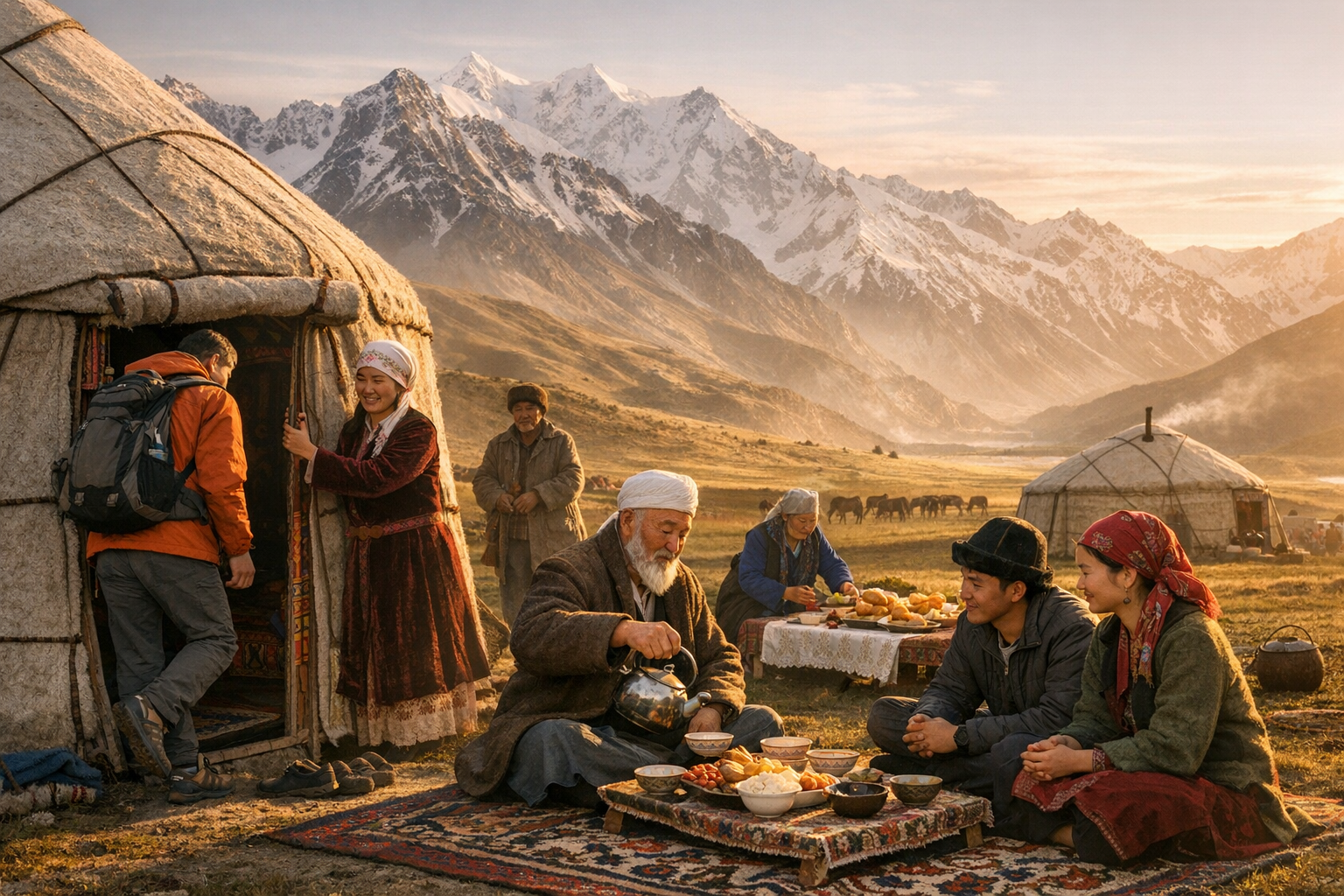
Understanding the Cultural Significance of Kyrgyz Yurts
The yurt, known locally as 'boz üý', is more than a mere dwelling; it's a symbol of Kyrgyz nomadic traditions. For generations, these portable, circular structures have been pivotal to the lifestyle of the Kyrgyz people, particularly adapted to their nomadic herding practices. Constructed primarily from wood and felt, yurts can be quickly assembled and disassembled, reflecting the mobility essential to a nomadic existence. These homes have a rich historical and cultural significance, rooted in centuries of tradition.
In the heart of Central Asia, Kyrgyzstan's topography ranges from the rugged peaks of the Tian Shan mountains to the vast grasslands known as jailoos. These landscapes are not just visually stunning; they are the backdrop for a way of life that has persisted despite the pressures of modernization. Yurts offer a direct connection to this heritage, providing a tangible link to an ancient lifestyle that emphasizes communion with nature and a deep respect for the land.
When entering a yurt, it’s crucial to understand both the physical layout and the cultural expectations. Traditionally, a yurt consists of a wooden frame covered with felt made from sheep’s wool. The entrance faces south, symbolically opening towards prosperity. Inside, space is organized meticulously, reflecting a microcosm of Kyrgyz society: the left side is typically reserved for men and guests, while the right is for women. Observing these customs is a mark of respect and awareness when visiting.
For travelers, experiencing a stay within a yurt offers more than shelter; it provides immersion into Kyrgyz culture. Understanding and participating in the customs surrounding yurt living—such as removing shoes before entering, sitting where indicated, or even sharing in traditional meals—ensures that visitors show reverence for Kyrgyz traditions. Exploring the culture of yurt life in Kyrgyzstan offers an enriching experience, blending the past with the present in a land where nature and tradition coexist harmoniously.
Practical Logistics, Safety Protocols & Cultural Etiquette
When planning to stay in a yurt, understanding practical logistics enhances the experience significantly. First, consider the optimal timing for your visit. The majority of yurts operate seasonally, aligning with the transhumance cycle of the Kyrgyz shepherds. Visiting between late spring and early autumn is ideal, allowing you to experience the full scope of nomadic activities.
Before setting out, ensure that you have all necessary permits, especially for trekking routes near sensitive border areas. Some regions require a border zone pass, which must be arranged in advance through local agencies or the Community Based Tourism (CBT) offices. These passes not only secure your travel but also contribute to the local economy by supporting CBT initiatives.
Safety is paramount in the mountainous regions of Kyrgyzstan. Travelers should prepare for high-altitude conditions by acclimatizing gradually. Staying hydrated and carrying water purification tablets ensures access to clean water during treks. It’s also advisable to travel with a knowledgeable guide who understands the local terrain and can communicate with nomadic hosts.
Cultural etiquette within a yurt is deeply respected. Upon arrival, removing your shoes and stepping inside with your right foot signifies respect. Greetings are usually formal; a handshake accompanied by the phrase 'Salamatsyzby' ('How are you?') suffices. Once inside, defer to your hosts regarding seating arrangements. Meals are another important facet, where communal dining emphasizes sharing and participation. Traditional foods such as beshbarmak are served, and it is customary to wait for the host to invite guests to begin eating. Adhering to these practices demonstrates appreciation for Kyrgyz hospitality and customs.
Respecting local customs inside a yurt is vital. Always wait for the host to indicate where you should sit upon entering. Typically, the left side is reserved for men and guests. Meals are communal; refrain from starting until the host signals.
Yurt stays often coincide with local festivals. Participate by joining in traditional games like kok-boru, or horseback archery. These experiences deepen your cultural immersion and offer firsthand insight into Kyrgyz sportsmanship and community spirit.
Understanding the significance of yak wool in the winter yurt construction can enhance your appreciation of Kyrgyz ingenuity. During colder months, yurts are fortified with extra layers, showcasing clever adaptation to harsh climates.
Frequently Asked Questions About Kyrgyz Yurt Etiquette
How should I behave when entering a Kyrgyz yurt?
Before entering, remove your shoes and step inside with your right foot as a sign of respect. Wait for the host to direct where to sit. The left side is usually for guests. Always greet with 'Salamatsyzby', maintaining a respectful demeanor.
What kind of food can I expect during a yurt stay?
Meals often feature traditional Kyrgyz dishes such as beshbarmak (noodles with meat), plov (fried rice), and kumis (fermented mare's milk). The food is usually communal, served at a central table, and is rich in cultural significance.
Is it necessary to book yurt stays in advance?
Yes, especially during peak seasons. Contact local CBT offices or tour operators to secure your spot. Prices vary, typically starting from 2,000 to 4,000 KGS Som per night, which often includes meals and a guided cultural experience.
Plan Your Kyrgyzstan Wilderness Expedition
Ready to explore the untamed Tian Shan mountains? Contact the Wild Kyrgyzstan team at wildinkyrgyzstan.com to book your custom guided trek or explore our self-guided expedition itineraries.